
In a context of accelerated energy transition, the European eFORT project has established itself as a strategic initiative to mitigate the vulnerabilities of Electric Power and Energy Systems (EPES). Faced with an increasingly decentralized and digitalized grid, the consortium—comprising 24 partners from ten countries—has worked intensively to develop solutions that protect critical infrastructure against technical failures, natural disasters, and, fundamentally, cybersecurity threats.
Cuerva, as the leader of the Spanish demonstrator, has played a pivotal role by connecting technological innovation with real system operations. Utilizing its living lab ecosystem and the infrastructure of the Escúzar substation, the company has transformed theoretical concepts into tangible tools that reinforce the reliability of the electricity supply in Spain.
Consolidation of the Spanish Demonstrator: Progress and Results
After completing the design phase during 2025, the project has entered a stage of technical maturity at the start of 2026. The work has been structured into three main technological pillars, achieving significant milestones in each:
- Augmented Reality and Asset Management via Blockchain: Moving beyond the initial design stages, the focus has evolved toward the implementation of Augmented Reality technologies, which are currently in their final stages of development. These tools allow for an immersive visualization of energy exchange models and distributed battery management, facilitating decision-making through advanced user interfaces and monitoring APIs.
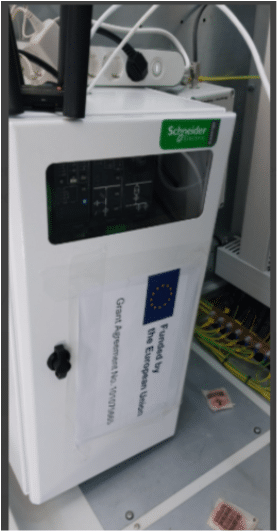
- Cybersecurity and Real-Time Monitoring in Escúzar: A cornerstone of the project has been the operational deployment of the SecureBox at the Escúzar substation, working in conjunction with Schneider Electric units. Since its installation, constant surveillance of network message traffic has been maintained. Although no critical incidents have been recorded, the tool has demonstrated its effectiveness in grid supervision, enabling the preventive detection of anomalies and validating its behavior against simulated attack vectors in a controlled environment.
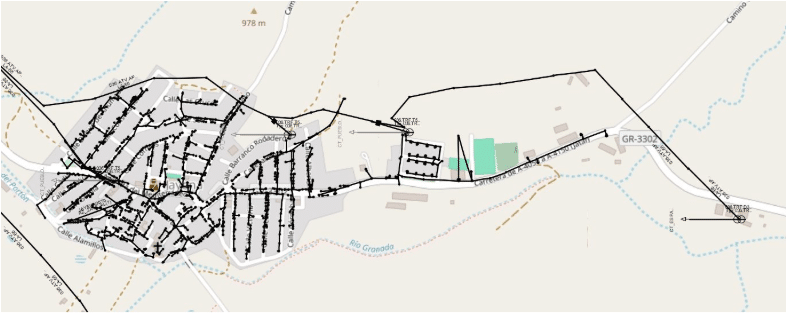
- Modeling and Resilience in Low Voltage Networks: The adaptation of risk analysis tools developed by the Universidad Pontificia Comillas has been successfully completed. Following an exhaustive modeling of Cuerva’s low voltage network, all study cases identified as critical during the planning phase have been simulated. These trials have validated the grid’s response capacity under stress scenarios, providing vital insights into this level of infrastructure.
2026 Horizon: Conclusions and Project Closure
The eFORT project is entering its final stretch during this year, 2026. Currently, efforts are focused on the collection and final analysis of data obtained in the field to draw solid conclusions regarding the impact of these innovations.
All detailed results, performance metrics of the new tools, and lessons learned will be presented comprehensively to coincide with the official closure of the project at the end of this year. With these advancements, Cuerva reaffirms its position at the forefront of digitalization, ensuring an energy infrastructure that is more secure, resilient, and prepared for future challenges.
Contact us
Follow us on: